Year established/built:
1745-01-01


1745-01-01
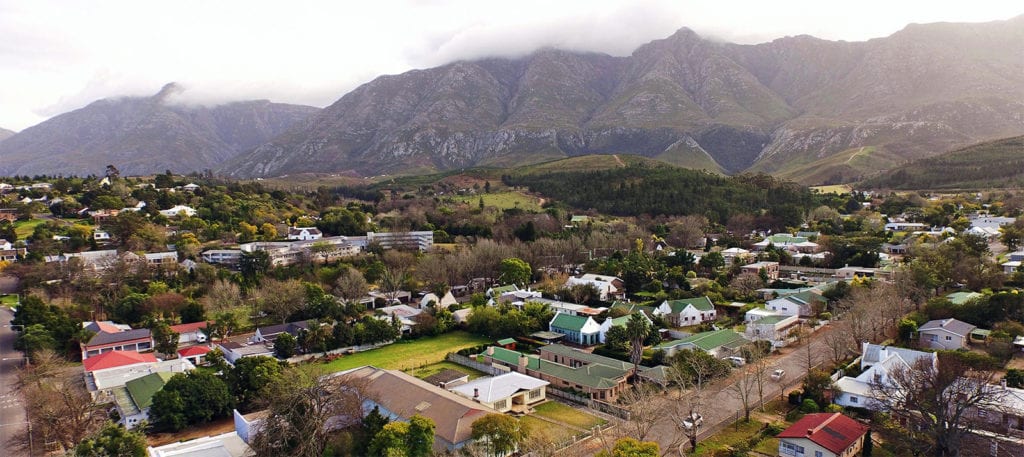
The village that grew around the Drostdy (magistracy), built in 1747 on the banks of the Koringlands (‘wheatfields’) river, was named for Governor Hendrik Swellengrebel and his wife Helena ten Damme.
From time immemorial this locality, near the confluence of the Breede River and Riviersonderend in the shadow of the Langeberg, was the haunt of large herds of game. Long before the arrival of the European settlers the abundance of water, grazing and wildlife attracted the Hessequa and other Khoe peoples to these parts.
Swellendam was situated on the old ‘Kaapse wapad’ (Cape wagon road), the main trail east blazed by early hunters, traders, and explorers. Soon the village became known to travelers and transport riders as the ‘last outpost’, where the replenished supplies, bought ne wagons and had damaged ones repaired, Merchants, wainwrights and blacksmiths set up business to meet these new demands and, with time, the town developed in to a prosperous commercial, agricultural, and administrative center, often dubbed ‘the capital of the Overberg’.
Swellendam is generally regarded as the cradle of South Africa’s merino sheep-farming industry. The first two rams and four ewes from the Escorial flock in Spain reached the Cape in 1789, and in 1803 some of their offspring were introduced to the meadows of Swellendam, where they were crossbred with indigenous fat-tailed Cape sheep.
In the 19th century the village was headquarters of the Overberg merchant empire of Joseph Barry and his family. The Barrys even issued their own banknotes and ran a coaster service between the mouth of the Breede River and Cape Town. The ‘Great Western Agricultural Exhibition’ was held at Swellendam in 1864. Early amenities included a library and a racecourse.
Disaster struck on 17 May 1865 when a gale-force wind carried a spark from a baker’s oven to the nearest thatched roof. Within hours much of the town, including about 40 Cape Dutch homes and buildings, was razed. Other misfortunes followed. Continuing drought and a trade recession led to the liquidation of the Barry empire in 1866 and this, coupled with the division of the extensive district into smaller administrative areas, deprived the town of much of its former status. The town has, however, since gradually recovered. The mainstay of the local economy today is agriculture and animal husbandry (cattle, horses. Merino sheep, wheat, and fruit).
In 1795 Swellendam enjoyed a moment of ‘international’ glory when the town’s residents proclaimed their own ‘republic’.
At Bontebokskloof are the graves of Klaas and Markus Sabana, the last leaders of the Hessequa Khoe communities, who built their kraals and hunted in these parts before the European settlers arrived.
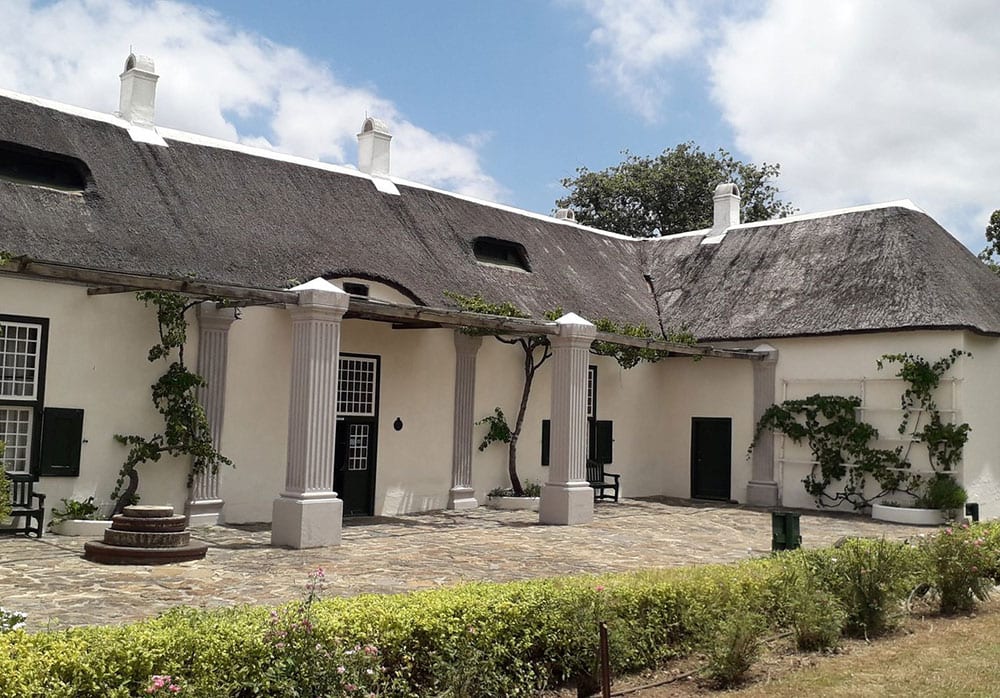
The Drostdy, which served as a seat of the magistrate for 100 years until 1846, is now a cultural history museum and one of South Africa’s great architectural treasures. The original T-plan was later turned into an H-plan with two wings. The floors are all traditional. Of special interest is the cow-dung finish of the kitchen floor and the restored lime-sand floor of the lounge.
The museum has been extended into Mayville. Another heritage site, built between 1853 and 1855 as a Victorian residence with a formal garden, complete with a gazebo. In other restored buildings round the Ambagswerf (‘trade yard’) are assembled the implements and tools of early blacksmiths, coppersmiths, charcoal burners and shoemakers, together with a working water mill, a horse-driven mill, and a threshing floor.
Opposite the Drostdy is the Old Goal building whose cells included one without windows (the ‘black hole’). The building served as home of the jailer who also doubled as postmaster.
The Cape Dutch building Oefeningshuis (‘meeting house’) was completed in 1838 and used for the religious instruction of freed slaves. There once was a real clock below the motionless plaster clock-face set in the gable of the old house.
Situate on Church Square there is now a row of double-story dorpshuise (‘town houses’), built by prosperous farmers of the area and used during their three-monthly visits for nagmaal (‘holy communion’). They would outspan their ox-wagons on the square.
Auld House, built in 1802 and bought in 1826 be merchant tycoon Joseph Barry, was occupied by his descendants for many years. Among the prize exhibits are the bell and some furniture salvaged from Kadie, the company’s steamer, which plied the seas between Cape Town and Port Beaufort, where she was wrecked in 1865.
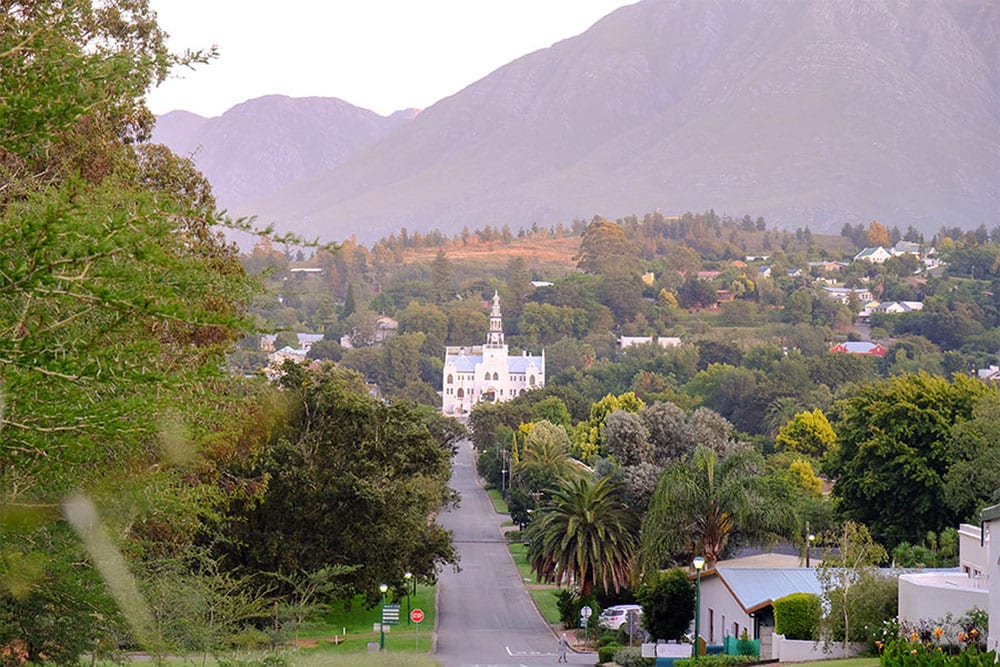
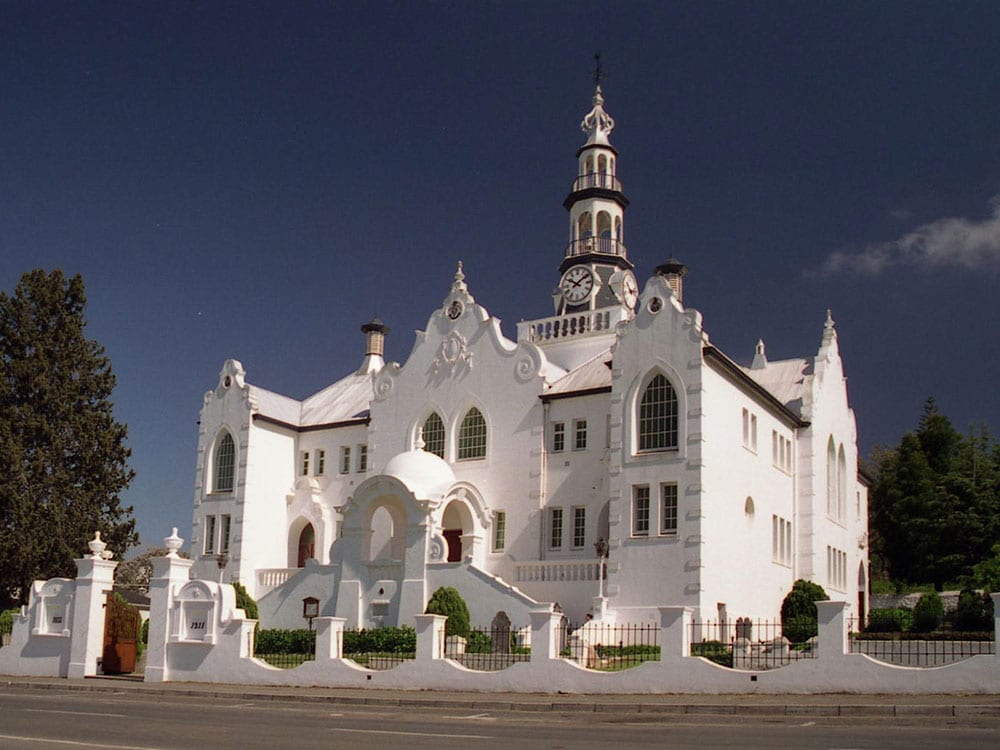
The Dutch Reformed church, with its four architectural styles, was built in 1910 on the site of the first church (1802). The little church of St Luke dates from 1865. The farm Klipriver (‘rocky river’), southwest of town, is the birthplace of Francis William Reitz, president of the republic of the Orange Free State from 1889 to 1895. Several oak trees in Swellengrebel Street have been proclaimed heritage sites.
The 14123-ha Marloth Nature Reserve, in the ravines of the Langeberg, northwest of the town and named for botanist Rudolph Marloth, boasts varieties of protea, erica, Leucadendron and flowering trees. Part of the 76-km Swellendam hiking trail runs through the reserve.
The ‘clock peaks’, highest in the Langeberg range, can be seen to the north of town. Locals claim they can tell the time of day by the shadows they cast (numbered from seven to one o’clock from east to west).
For just a few months in 1795 Swellendam functioned as a ‘national capital’. The local burghers dismissed the landdrost (magistrate) and declared their district a new colony, independent of the Dutch East India Company, which had established the original settlement at the Cape in 1652 and which, by the end of the 18th century, had virtually lost control of the outlying regions.
A ‘national assembly’, led by heemraad (‘councilor’) Hermanus Steyn, was constituted in June and the burghers resolved to fight to the ‘last drop of blood’ for the right to live ‘under a free republic’.
The reasons for the revolt were much the same as those that prompted the rebellion of the burghers of Graaf-Reinet in the same year. Apart from the general incompetence of the moribund administration, the more immediate cause of the rebellion was the unilateral cancellation, by the Dutch company, of an agreement with local wheat farmers. In terms of the agreement, local heat had been sold at fixed prices to the company’s granary at Mossel Bay, from where it was shipped to Cape Town.
When the British occupied the Cape in September of the same year, Petrus Delport, leader of the rebellion, refused to take the oath of allegiance to King George III and was banished. The rest of the burghers acquiesced to their fate, and the little republic came to a quiet end.
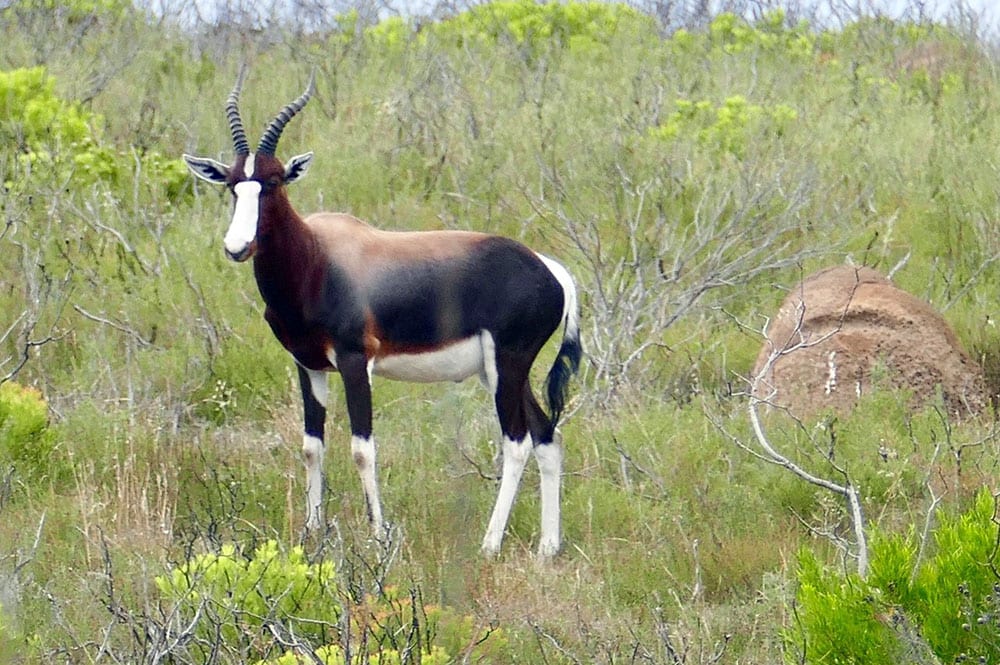
By the early 20th century, the bontebok had become the rarest species of antelope in earth, its numbers drastically reduced by farmers and hunters. Just 17 of the animals survived on the land of a few conservation-minded farmers, mostly in the Bredasdorp district. It was on the farm Guarri Bush, south of this town, that a reserve was first established in 1931. However, because of parasitic infections caused by a lack of certain trace elements in the local soil, the bontebok did not multiply as expected.
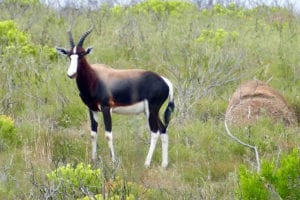
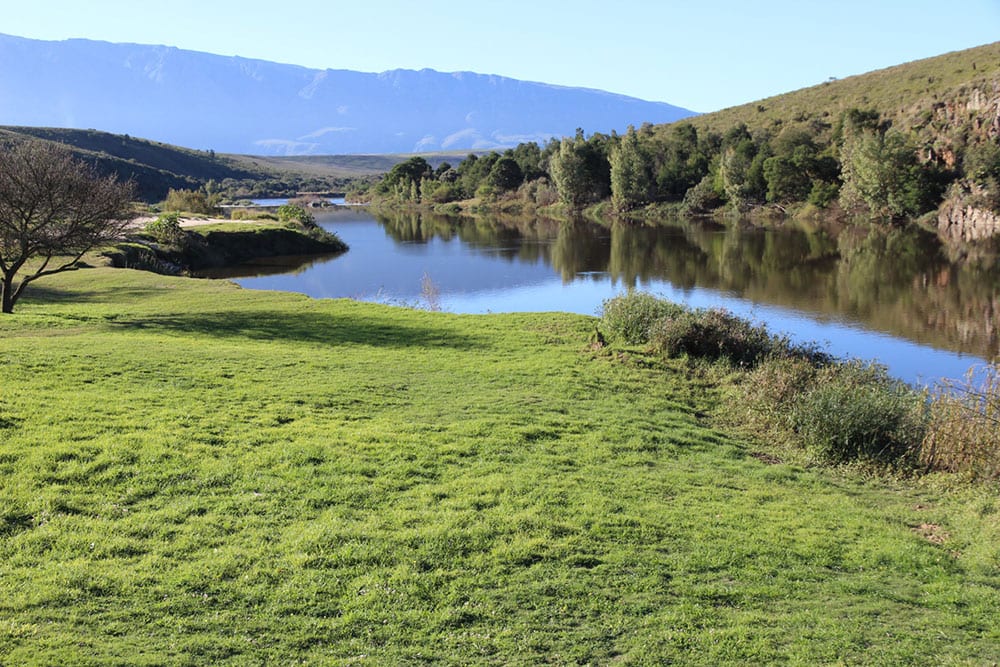
Thus, it was decided, in 1960, to relocate the nature reserve to the banks of the Breede River a few kilometers southeast of Swellendam, to which 63 bontebok were moved. Not only have the animals flourished, but many other specie of wildlife, indigenous to this are centuries ago have been reintroduced to the 3455-ha park.
These include mountain zebra, grysbok, grey rhebok, grey duiker, steenbok, and springbok. Also, present are black-jackal, aardwolf, and bat-eared fox. There are some 205 recorded bird species, including Denham’s bustard. The fynbos includes proteas, ericas, restios and geophytes.
Indigenous trees, many growing along the banks of the river, include Breed River yellowwood, wild olive, white milkwood and various Karoo acacias.
Wooden chalets are available at the new Lang Elsis’s camp, as well as camping and caravanning. Activities include swimming, angling, canoeing and mountain biking.


Add a review